
Your cart is currently empty!
Securing Church Services: Praise God and Pass the Ammunition
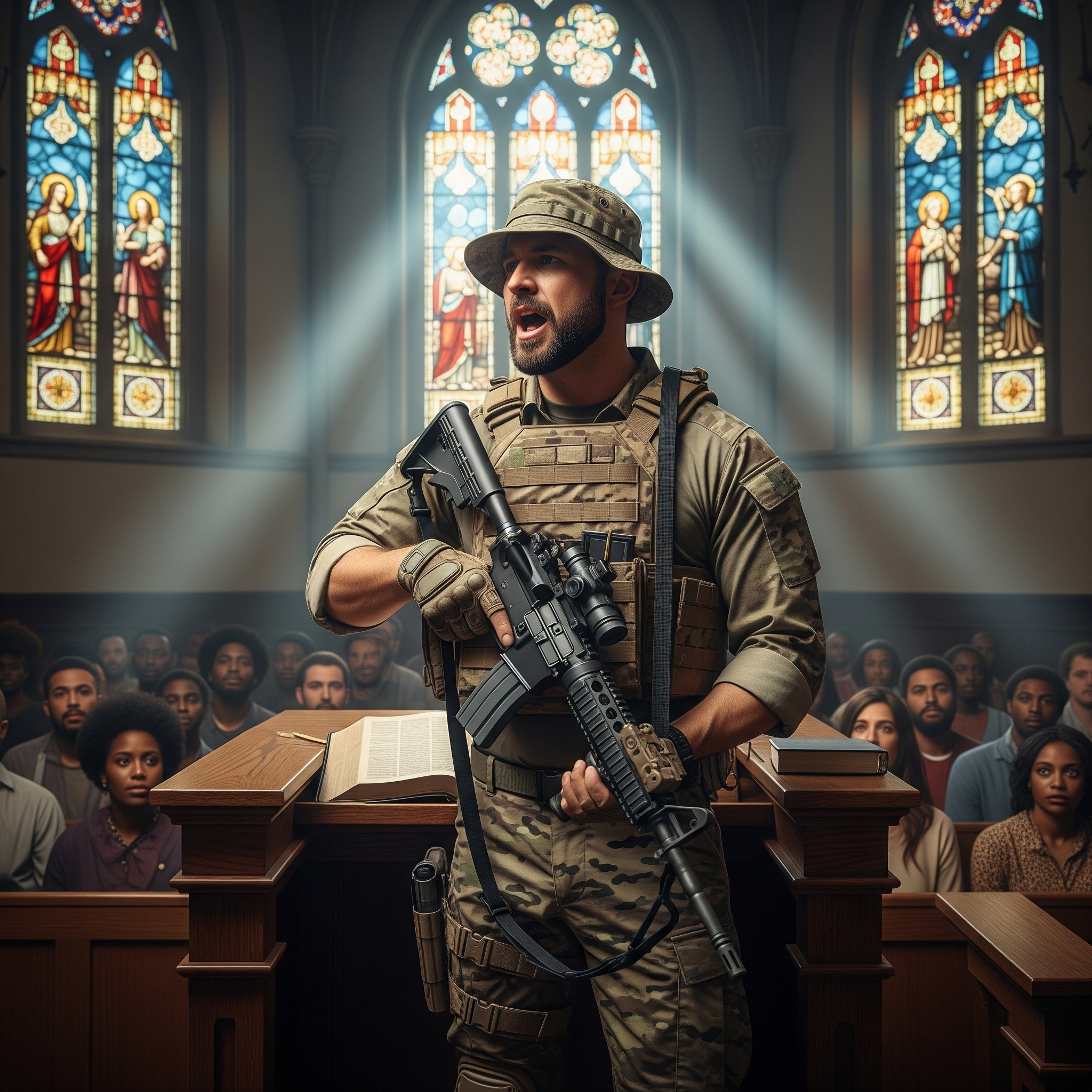
With an uptick in attacks on Christians by various threats, securing church services is likely at the top of everyone’s mind. If not, it should be! Thanks to the current political climate, those with mental issues are unable to cope. Instead of turning to help, they decide to do harm. There’s no reason to leave things up to chance.
Today we will look into one of the ways churches and other appropriate non-profits can purchase lethal (and non-lethal) protection for securing church services. Additionally, we dive into the pros and cons of hired security versus allowing the flock to carry.
Can a church Buy a Gun for Securing Church Services?
A church, as a non-profit entity, can legally purchase a firearm for securing church services, but the process is complex and can come with significant legal and financial liabilities. While federal and Oklahoma state laws do not prohibit such a purchase, the decision involves far more than a simple transaction and requires careful consideration of federal firearm regulations, state security licensing, and substantial insurance implications.
The Process: How a church Buys a Firearm
A church, corporation, or other legal entity does not have a physical person to undergo a background check. The Bureau of Alcohol, Tobacco, Firearms and Explosives (ATF) has an established procedure for such a transaction. This process ensures that a non-prohibited individual is responsible for the transaction while legally establishing the church as the owner of the firearm.
- Official Authorization: The church’s governing body (e.g., board of directors, elders) must pass a formal resolution to identify those responsible for securing church services. This official document authorizes a specific individual—typically a leader or officer of the church—to purchase a firearm on behalf of the organization.
- Completing the ATF Form 4473: The authorized individual goes to a Federally Licensed Firearm Dealer (FFL) to make the purchase. They must complete ATF Form 4473, the standard Firearm Transaction Record.
- Personal Information Required: The authorized individual must use their own personal information to fill out the form. The National Instant Criminal Background Check System (NICS) check is performed on this individual, not the church wanting to secure church services.
- Documentation: A copy of the church’s official resolution authorizing the purchase must be attached to the Form 4473 and kept by the FFL dealer. The firearm is then registered as an asset of the church.
Oklahoma State Law Considerations for Securing Church Services
Oklahoma law is generally permissive regarding firearms and self-defense, which extends to places of worship.
- Right to Establish Policy: Oklahoma law explicitly allows a place of worship to establish its own policies regarding the possession of firearms on its property. This means a church can permit or prohibit firearms as it sees fit for securing church services.
- Self-Defense Protections: The law provides a strong legal presumption that a person using defensive force in a place of worship has a “reasonable fear of imminent peril of death or great bodily harm.” This offers a degree of legal protection for individuals acting in self-defense.
- Armed Security Guard Licensing: A critical distinction exists between allowing congregants to carry firearms and forming an official security team. Under Oklahoma law (Title 59, § 1750.4a), anyone employed or operating as an armed security guard must be licensed by the Council on Law Enforcement Education and Training (CLEET). This requirement likely applies to a formalized, volunteer security team operating under the church’s direction, even if they are not paid.
The Impact of 501(c)(3) Non-Profit Status & Liability
The primary concern for a 501(c)(3) organization securing church services is that its activities must align with its exempt purpose. Ensuring the safety and security of its congregation during services and activities is a legitimate purpose. As long as the purchase does not violate the prohibition against “private inurement” (improperly benefiting an individual) or constitute a substantial non-exempt activity, it is generally permissible.
The most significant hurdle for a church is not the legality of the purchase but the immense liability it creates. When a church establishes a formal, armed security team—whether using a church-owned gun or authorizing volunteers to use their own—it assumes a high level of responsibility for their actions.
- Increased Liability: If an incident occurs involving a member of the official security team, the church itself can be held civilly liable for negligence in areas such as training, screening, or establishing use-of-force policies.
- Insurance Requirements: Standard church liability insurance policies often do not cover incidents involving firearms used for securing church services. To obtain coverage, insurers typically require:
- Written Policies: A comprehensive security plan and use-of-force policy.
- Thorough Vetting: Criminal background checks for all armed team members.
- Professional Training: Documented, regular training from certified instructors in firearm proficiency, de-escalation techniques, and legal protocols.
Alternative, Lower-Risk Options
Due to these complexities, risk management professionals and insurance carriers often recommend that churches consider alternatives to owning firearms or organizing a formal armed volunteer team:
- Hiring Professional Security: Contracting with a licensed and insured security company or hiring off-duty law enforcement officers. This transfers a significant portion of the liability to the security provider.
- Allowing Individual Carry: Permitting licensed, trained members of the congregation to carry their own firearms for securing church services, without designating them as part of an official church security team. In this scenario, the individual bears more of the personal liability.
Whether you’re certain, or need more information, we want to help you secure church services for those you serve. Contact us any time for a no cost consultation to determine the best route for you and your church.